

Bold style choices reveal more than personal taste. Cyberpunk’s neon rebellion and normcore’s quiet conformity mark two of the most talked-about fashion trends shaping identity and culture today. For anyone navigating modern self-expression, understanding these aesthetics is more than a style statement. This guide highlights what sets these opposites apart, uncovers the social messages behind each look, and helps you decide which philosophy fits your own sense of individuality.
Table of Contents
- Cyberpunk And Normcore Defined
- Distinctive Aesthetic Core Attributes
- Material And Design Contrasts
- Cultural Origins And Influences
- Functional Uses And Style Applications
- Stylistic Risks And Complementary Alternatives
Key Takeaways
| Point | Details |
|---|---|
| Cyberpunk Celebrates Rebellion | Emphasizes individual defiance against societal norms through technologically advanced aesthetics and narratives. |
| Normcore Advocates Anonymity | Promotes collective camouflage and simplicity, encouraging individuals to blend in rather than stand out. |
| Aesthetic Material Choices Differ | Cyberpunk uses provocative, futuristic materials while normcore relies on conventional, comfortable textiles. |
| Functional Styles Reflect Philosophies | Cyberpunk focuses on utility in hostile environments, while normcore emphasizes social adaptability and comfort. |
Cyberpunk And Normcore Defined
In the complex landscape of cultural aesthetics, Cyberpunk and Normcore represent two starkly contrasting approaches to identity, technology, and social expression. According to Wikipedia, cyberpunk is a science fiction subgenre characterized by a provocative fusion of ‘low-life and high tech,’ where advanced technological achievements coexist with profound societal decay.
Cyberpunk isn’t just a genre - it’s a rebellious philosophy that challenges mainstream technological narratives. Imagine a world where cutting-edge technology intersects with urban grit: neon-lit streets, neural implants, and digital rebels pushing against corporate control. Cyberpunk aesthetics scream nonconformity, featuring dark, tech-augmented fashion that signals resistance to normalized systems.
In sharp contrast, Wikipedia defines Normcore as a unisex fashion trend prioritizing deliberate averageness. This style isn’t about standing out, but intentionally blending in. Normcore enthusiasts wear unpretentious clothing like basic jeans, plain t-shirts, sweats, and simple sneakers. Where cyberpunk celebrates radical individualism through technological augmentation, normcore finds power in anonymity and collective camouflage.
Ultimately, these two aesthetic philosophies represent opposing responses to cultural complexity. Cyberpunk screams ‘hack the system,’ while Normcore whispers ‘disappear into the background.’ One demands attention through technological rebellion, the other demands invisibility through strategic ordinariness. Explore the digital rebellion behind cyberpunk culture to understand how these contrasting worldviews challenge our perceptions of identity and technology.
Distinctive Aesthetic Core Attributes
Cyberpunk and Normcore represent diametrically opposed aesthetic philosophies, each crafting a unique visual language that communicates profound cultural statements. According to Wikipedia, cyberpunk aesthetics are characterized by urbanized, artificial landscapes saturated with neon lights, embodying a fusion of advanced technology and societal decay that paints a dystopian vision of potential futures.
In the cyberpunk realm, visual aesthetics are a rebellion. The style embraces a dark, gritty palette with electric undertones - think chrome-plated neural interfaces, leather jackets with digital circuitry patterns, and clothing that suggests both technological augmentation and street-level survival. Cyberpunk fashion isn’t just clothing; it’s armor against corporate homogenization, with each garment telling a story of resistance and technological adaptation.
Conversely, Wikipedia reveals that normcore aesthetics pursue the exact opposite strategy. This style champions simplicity and neutrality, featuring casual, unisex clothing designed to avoid drawing attention. Normcore practitioners wear plain t-shirts, basic jeans, and unremarkable sneakers - a deliberate rejection of individual expression in favor of collective anonymity. Where cyberpunk screams individual defiance, normcore whispers collective camouflage.
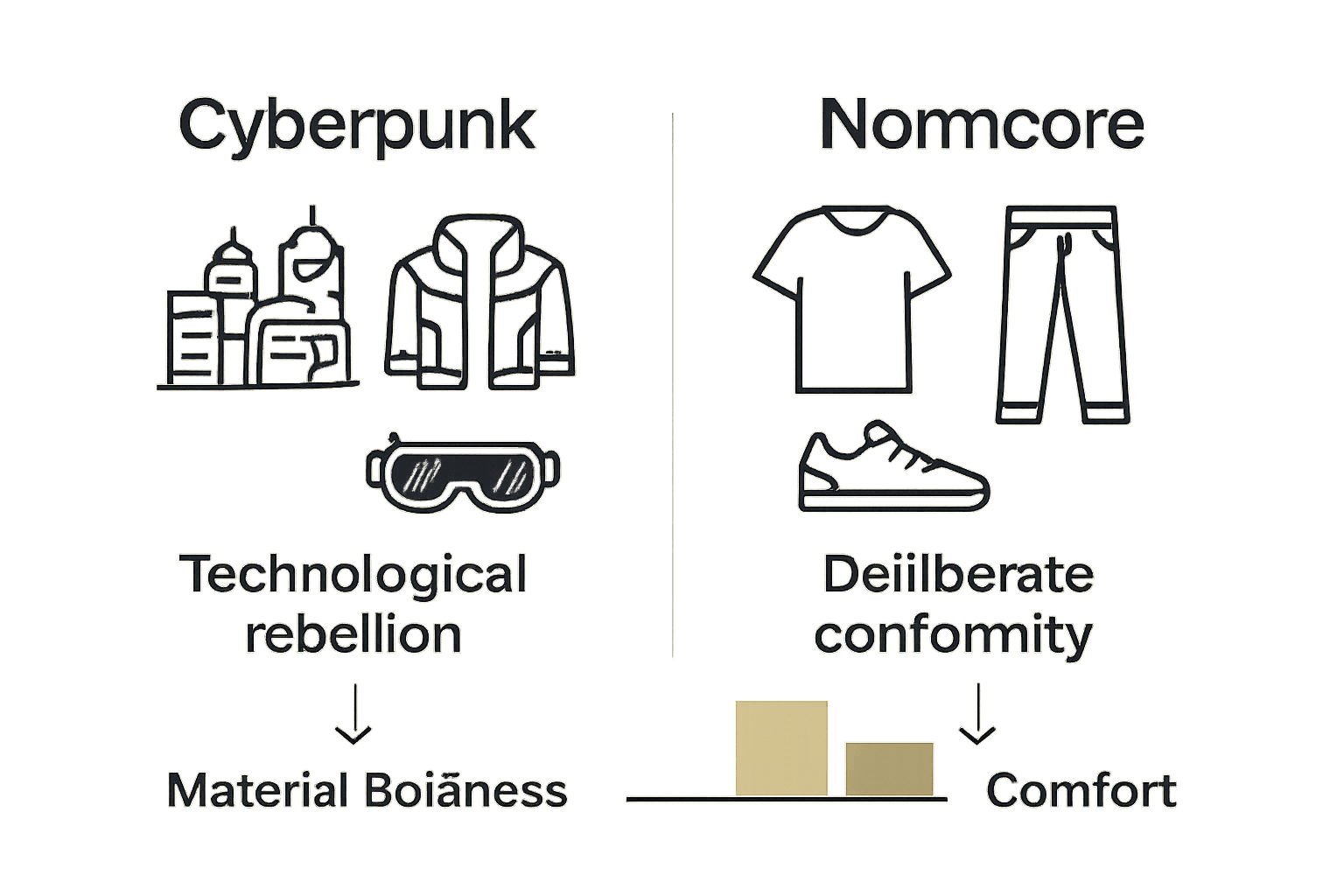
These contrasting aesthetic approaches reveal deeper philosophical tensions. Cyberpunk demands visibility through technological performance, while normcore seeks invisibility through strategic ordinariness. One aesthetic celebrates the individual as a technological rebel, the other finds power in disappearing into the social landscape. Explore the digital rebellion behind cyberpunk culture to understand how fashion becomes a profound statement of cultural resistance and adaptation.
Material And Design Contrasts
Material selection becomes a profound statement of philosophical intent when comparing cyberpunk and normcore design approaches. According to SFR Review, cyberpunk fashion deliberately incorporates provocative materials like leather, metal, and synthetic fabrics that scream technological rebellion, emphasizing a futuristic aesthetic with metallic accents and highly functional accessories.
Cyberpunk materials are intentionally confrontational. Leather jackets with integrated digital circuitry, metal-infused textiles that suggest biomechanical augmentation, and synthetics that reflect urban decay create a visual language of technological resistance. Each fabric choice tells a story of survival, adaptation, and defiance against standardized corporate aesthetics. Think reflective surfaces that capture neon city lights, materials that seem to pulse with an electric potential, transforming clothing into a form of technological armor.
In stark contrast, Wikipedia reveals that normcore design prioritizes conventional materials like cotton and denim, focusing entirely on comfort and practicality. Where cyberpunk materials scream rebellion, normcore textiles whisper conformity. Plain white t-shirts, basic blue jeans, and simple cotton sweaters become a uniform of deliberate anonymity. The design philosophy rejects individual expression in favor of blending seamlessly into the social background, with materials chosen for their unremarkable, universally accessible qualities.
Ultimately, material choices in these aesthetic approaches represent opposing cultural strategies. Cyberpunk transforms clothing into a technological manifesto, while normcore turns fashion into a form of social camouflage. One demands attention through radical material innovation, the other seeks invisibility through mundane textile choices. Explore the digital rebellion behind cyberpunk culture to understand how even the smallest material decision can become a powerful statement of cultural identity.
Cultural Origins And Influences
Cyberpunk and Normcore represent profound cultural responses to technological and social transformations, each emerging from distinct historical moments of technological and social anxiety. According to Wikipedia, cyberpunk originated from the New Wave science fiction movement of the 1960s and 1970s, deeply influenced by visionary authors like Philip K. Dick and William Gibson, who explored complex narratives of technological advancement and societal disruption.
Cyberpunk’s roots run deep into literary soil that questioned humanity’s relationship with technology. Authors like Gibson didn’t just write stories - they constructed entire philosophical frameworks examining how digital systems might reshape human identity. The movement emerged as a critical response to corporate globalization, technological determinism, and the increasing power of technology to reshape social structures. Cyberpunk became a lens for understanding potential futures where individual agency battles against massive technological and corporate systems.
In sharp contrast, Wikipedia reveals that normcore represents a much more recent cultural phenomenon. Emerging in 2013 through the trend forecasting group K-HOLE, normcore was a direct response to the hyperindividualistic digital age. Popularized by a 2014 New York magazine article, this aesthetic represented a collective exhaustion with constant personal branding and the pressure to stand out. Where cyberpunk celebrated technological rebellion, normcore proposed surrender - a strategic decision to blend into the social background as a form of resistance against constant performative identity.
These contrasting cultural origins reveal fundamental differences in approaching social complexity. Cyberpunk originated from literary speculation about technological futures, while normcore emerged from contemporary social media fatigue. One demanded radical individualism through technological narrative, the other proposed anonymity as its own form of power.
IMAGE:descriptive_key_1] [Explore the digital rebellion behind cyberpunk culture to understand how these philosophical approaches continue to challenge our understanding of identity, technology, and social belonging.
Functional Uses And Style Applications
Style functionality represents a critical divergence between cyberpunk and normcore approaches, each addressing human needs through radically different design philosophies. According to SFR Review, cyberpunk fashion serves both aesthetic and functional purposes, incorporating elements like utility belts and protective gear that reflect a readiness for navigating hostile, dystopian environments.
Cyberpunk’s functional design goes beyond mere clothing - it’s survival gear for a hypothetical technological battlefield.
Imagine jackets with integrated digital communication systems, pants with multiple concealed pockets for tech components, and accessories that serve as both fashion statements and practical tools. Each garment becomes a technological ecosystem, designed to enhance human capability and provide protection against urban decay. Utility isn’t just a feature; it’s a fundamental design principle that transforms clothing into a form of personal technological armor.
In contrast, Wikipedia reveals that normcore fashion emphasizes a different kind of functionality - one centered on comfort and universal adaptability. Where cyberpunk prepares for technological conflict, normcore designs clothing that seamlessly transitions across social contexts. Plain t-shirts, simple jeans, and basic sneakers become a uniform of practical anonymity. The style’s functional application is social camouflage: clothing that allows the wearer to blend effortlessly into any environment without drawing attention.
Ultimately, these approaches represent contrasting survival strategies in a complex social landscape. Cyberpunk’s functional style screams preparedness and individual resilience, while normcore’s application whispers strategic invisibility. One demands technological readiness, the other seeks social adaptability. Explore the digital rebellion behind cyberpunk culture to understand how clothing can be a profound statement of philosophical resistance.
Stylistic Risks And Complementary Alternatives
Fashion adaptation requires nuanced understanding of stylistic boundaries and personal expression. According to SFR Review, adopting cyberpunk fashion carries inherent risks of being perceived as overly aggressive or costume-like, suggesting that subtle integration of cyberpunk elements into everyday attire might provide a more balanced approach.
Cyberpunk’s aesthetic intensity demands strategic navigation. Full immersion risks appearing theatrical or disconnected from everyday social contexts. Smart practitioners might incorporate cyberpunk elements through strategic accessories - a metallic neural-link inspired bracelet, subtly circuited jacket lining, or tech-inspired minimalist patches. These nuanced choices allow technological rebellion without overwhelming personal presentation. Think digital insurgency through precision, not volume - a whispered technological manifesto rather than a screaming costume.
Conversely, Wikipedia reveals that normcore’s primary stylistic risk involves potential loss of individual identity. While offering safe, timeless clothing options, the style might render wearers indistinguishable from the broader social landscape. Innovative alternatives involve incorporating unique accessories or strategic statement pieces that personalize the otherwise neutral aesthetic. A distinctive watch, an unexpected color accent, or a minimalist tech-inspired pin can transform basic normcore clothing into a more personalized statement.
Ultimately, both styles offer pathways for self-expression through carefully considered choices. Cyberpunk demands technological narrative, normcore seeks social adaptability. The most compelling approach involves understanding each style’s core philosophy and integrating elements that resonate with personal identity. Explore the digital rebellion behind cyberpunk culture to discover how fashion becomes a profound language of individual resistance.
Discover Your Perfect Style Between Cyberpunk and Normcore
Struggling to express your identity through fashion? The choice between standing out with bold, futuristic cyberpunk looks or blending in with the subtle normcore aesthetic can be overwhelming. This guide highlights the challenge of balancing technological rebellion and social invisibility. Whether you want to boldly showcase your individuality or embrace a calm, everyday comfort, understanding these opposing styles is key.
Unlock the power of cyberpunk’s iconic streetwear with our CyberPunk Collection | BitChat Merch Futuristic Streetwear.
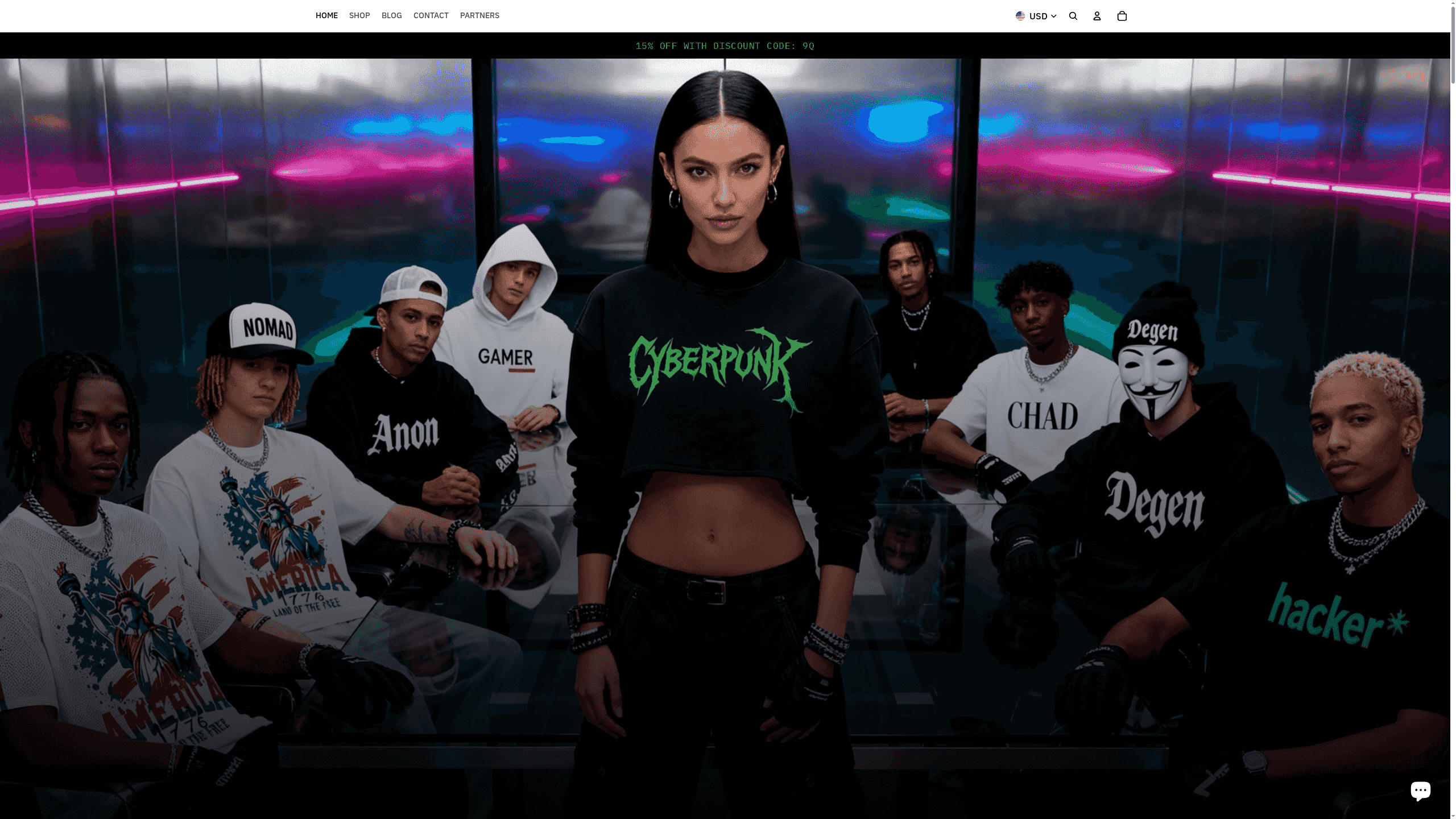
Explore uniquely designed t-shirts and hoodies built for the internet generation who demand cutting-edge style and cultural meaning. Now is the time to make your statement by embracing the cyberpunk aesthetic that rejects the norm. Dive into our full selection at BitChat Merch and find the perfect piece that speaks to your digital rebellion. For tailored fits, check out our Men and Women categories.
Transform your wardrobe today and wear what defines you.
Frequently Asked Questions
What is the main difference between cyberpunk and normcore aesthetics?
Cyberpunk embraces a radical, high-tech aesthetic characterized by urban decay, neon lights, and a sense of rebellion against corporate control. In contrast, normcore prioritizes simplicity and anonymity, featuring unpretentious clothing that aims to blend into the background.
How do materials used in cyberpunk fashion differ from those in normcore?
Cyberpunk fashion utilizes provocative materials such as leather, metal, and synthetic fabrics, emphasizing a futuristic and rebellious aesthetic. Normcore, on the other hand, focuses on conventional fabrics like cotton and denim, opting for comfort and practicality over distinctiveness.
What cultural influences shaped the emergence of cyberpunk and normcore?
Cyberpunk originated from the New Wave science fiction movement, influenced by authors like Philip K. Dick and William Gibson, and reflects anxieties around technological advancement and societal disruption. Normcore emerged more recently, responding to the pressures of personal branding and individuality in the digital age.
How do lifestyle applications of cyberpunk and normcore differ?
Cyberpunk fashion incorporates functional elements suitable for navigating dystopian environments, such as utility belts and protective gear. Normcore focuses on versatility and comfort, designing clothing that helps individuals blend into various social contexts without drawing attention.
Recommended
- CyberPunk Lore: The Digital Rebellion | BitChatMerch – bitchatmerch.com
- CyberPunk 2077 Loose Fit T-Shirt - Gaming Streetwear | Bitchat – bitchatmerch.com
- CyberPunk 2077 Snow Washed Oversized T-Shirt - Gaming Streetwear | Bitchat – bitchatmerch.com
- CyberPunk 2077 Snow Washed Hoodie - Premium Gaming Streetwear | Bitchat – bitchatmerch.com